
You've been applying to jobs for weeks. Maybe months. Every application feels like shouting into a void—upload resume, fill out the same fields, write another cover letter, hit submit, hear nothing.
Then you discover AI auto-apply tools. Finally, something that can do the tedious work for you. But now you're staring at two options: Sonara AI and Remote Job Assistant. Both promise to automate your job search. Both claim they'll get you more interviews.
So which one actually delivers? Especially if you're not a software engineer—if you're a stay-at-home parent returning to work, a career changer, or someone looking for remote customer service, operations, or sales roles?
Get Remote Job Tips in Your Inbox
Weekly strategies, salary data, and new opportunities
Unsubscribe anytime. No spam.
We put both platforms through their paces. Here's what we found.
Winner: Remote Job Assistant for non-technical job seekers.
Why RJA wins:
- Review-before-submit control (Sonara auto-submits without review)
- AI-tailored resumes and cover letters (Sonara has neither)
- Interview prep tools included (Sonara has none)
- Learns from your feedback to improve matches
- 500K+ verified company career pages (no fake listings)
Why Sonara falls short:
- 25-40% application failure rate reported by users
- Poor job matching (IT managers getting sales roles)
- No customization or ATS optimization
- Generic applications that don't stand out
Bottom line: If you want quality over quantity and applications that actually convert to interviews, Remote Job Assistant is the clear choice.
This comparison is based on publicly available information and user-reported experiences.
The Core Difference: Quality vs. Volume
Let's cut to the chase. Sonara AI and Remote Job Assistant take fundamentally different approaches to automated job applications.
Sonara AI is built for volume. It scans job boards, finds matches, and fills out applications fast. The philosophy is simple: more applications equals more chances.
Remote Job Assistant is built for quality. Yes, it automates applications—but it also tailors each one, lets you review before submitting, and learns from your feedback to get smarter over time.
Here's why that distinction matters: According to Glassdoor, the average job posting receives 250 applications. Only 4-6 candidates get called for interviews. That's roughly a 2% callback rate.
Spraying out hundreds of generic applications doesn't beat those odds. Sending fewer, highly-targeted applications does.
Decode Any Job Posting
Paste a job description and get instant insights: what they really want, red flags to watch, and how to stand out.
Feature-by-Feature Breakdown
Let's compare what you actually get with each platform.
Application Control
Sonara AI: Auto-fills applications, but you still need to manually click "submit" for each one. The AI pre-populates fields based on your resume, but you can't easily edit or review what it's sending before it goes out.
Remote Job Assistant: Every application can be reviewed and edited before submission. You stay in control of what employers see. If the AI suggests something that doesn't sound like you, change it. The system learns from your edits and improves future applications.
Resume Tailoring
Sonara AI: Basic auto-fill only. It uses your uploaded resume as-is. No optimization for Applicant Tracking Systems (ATS), no customization per job.
Remote Job Assistant: Built-in AI Resume Builder that tailors your resume for each specific role. It highlights relevant skills, adjusts keywords for ATS compatibility, and gives you the option to review changes before applying.
Over 75% of resumes are rejected by ATS software before a human ever sees them. If your resume isn't optimized for each job's keywords, you're invisible—no matter how qualified you are.
Cover Letters
Sonara AI: Does not generate cover letters. You're on your own here.
Remote Job Assistant: AI Cover Letter Generator creates tailored cover letters for each application. It pulls from your experience and matches the job description, so every letter feels personalized—not templated.
Interview Preparation
Sonara AI: No interview prep features.
Remote Job Assistant: Includes a Mock Interview Chatbot that simulates real interview scenarios. Practice answering questions for your specific role, get feedback, and walk into interviews feeling prepared.
Job Matching Accuracy
Sonara AI: Users frequently report poor job matching—engineers getting sales roles, managers seeing entry-level positions. On Product Hunt, users complain that AI-generated answers are "often wrong, left empty, or just copy-pasted from the resume." The algorithm prioritizes volume over relevance.
Remote Job Assistant: Uses match-level filters that let you control how selective the AI should be. Train it by giving feedback—thumbs down on bad matches, and it learns. The result: fewer irrelevant applications, more interviews for jobs you actually want.
Application Success Rate
Sonara AI: Multiple user reviews report a 25-40% application failure rate due to email verification issues and technical glitches. One TrustPilot reviewer paid for six months and received only one interview despite hundreds of applications. Applications that fail don't count toward your job search—they just waste time.
Remote Job Assistant: Applies directly to verified jobs on over 500,000 company career pages. No middleman job boards, no expired listings, no fake postings. Every application goes somewhere real.
Stop Applying Manually
Our AI applies to hundreds of matching jobs while you sleep. Wake up to interviews, not more applications.
Side-by-Side Comparison
Here's how Remote Job Assistant and Sonara AI stack up across the features that actually matter:
| Feature | Remote Job Assistant | Sonara AI | Winner |
|---|---|---|---|
| Review Before Submit | ✓ Full control over every application | ✗ Auto-submits without review | RJA |
| AI Resume Tailoring | ✓ Customized for each job + ATS optimization | ✗ Uses generic resume as-is | RJA |
| Cover Letter Generator | ✓ Personalized for each role | ✗ Not available | RJA |
| Interview Prep | ✓ Mock interview chatbot included | ✗ Not available | RJA |
| AI Learning | ✓ Learns from your feedback | ✗ Static algorithm | RJA |
| Job Matching Quality | ✓ Accurate, learns preferences | ✗ Poor (users report mismatches) | RJA |
| Application Success Rate | ✓ High (verified company pages) | ✗ 25-40% failure rate reported | RJA |
| Target Audience | Non-technical remote workers | General/tech-focused | RJA |
| Daily Application Limit | Up to 50 (premium) | Capped at handful per day | RJA |
| True Cost | $29.90/month but faster time-to-hire (full toolkit included) | $23.95/4 weeks but longer job search (high failure rate, no customization) | RJA |
Overall Winner: Remote Job Assistant — 10/10 categories

Who Is Each Platform Actually Built For?
This is where the real difference becomes clear.
Sonara AI targets the general job market. Most of their marketing, features, and job matching algorithms seem optimized for tech workers and high-volume applicants who want to blast out applications and see what sticks.
Remote Job Assistant is the first AI auto-apply tool designed specifically for non-technical remote job seekers. That means:
- Stay-at-home parents returning to the workforce
- Career changers pivoting into new fields
- People seeking remote customer service, operations, admin, or sales roles
- Job seekers who don't have a coding portfolio to fall back on
If you're not competing for software engineering roles—if you're looking for remote customer service jobs or flexible positions that fit around family life—Remote Job Assistant understands your market.
The job descriptions are different. The keywords that matter are different. The competition is different. And the AI is trained accordingly.
Most AI job tools are built by engineers, for engineers. Remote Job Assistant was built for everyone else—the 80% of remote workers who aren't writing code. That specialization translates to better job matches and more relevant applications.
Pricing Comparison
Let's talk money—and value.
On paper, Remote Job Assistant costs a little more than Sonara AI—we're talking a few dollars a week. But in reality, RJA is the cheaper option because you'll likely land a job faster.
Here's why: Sonara's 25-40% application failure rate means a third of your applications may never reach employers. Add in poor job matching (IT managers getting sales roles, remember?) and you're paying for applications that go nowhere. Every week you're stuck job hunting is another week paying for a tool that isn't delivering.
Remote Job Assistant gets you hired faster because:
- Every application actually arrives — sent directly to verified company career pages, not expired listings or fake postings
- Your resume is tailored for each role — with ATS optimization so you actually get seen
- Cover letters are written for you — personalized to each job, not generic templates
- You're prepared when interviews come — mock interview tools help you convert interviews into offers
The real cost isn't the monthly subscription. It's how long you stay unemployed.
Actual pricing:
Sonara AI offers a $2.95 trial (10 applications or 14 days), then $23.95 every 4 weeks. Annual plan is $71.40 ($5.95/month billed upfront).
Remote Job Assistant starts at $8.90/week or $29.90/month for the Premium plan (up to 20 applications per day). The Elite plan is $12.90/week or $39.90/month for up to 50 applications per day—both include the full toolkit: AI resume tailoring, cover letter generation, interview prep, and verified job applications.
Bottom line: A tool that costs a few dollars less but keeps you job hunting for months isn't saving you anything. The fastest path to a paycheck is the real deal.
What Real Users Say
We dug through reviews on TrustPilot, Product Hunt, and Reddit to see what actual users experience.
Common Sonara AI Complaints
- "The AI comes up with answers that are often wrong, left empty, or just copy-pasted from my resume" — Product Hunt review
- "Job matching was poor... I'm an IT manager and kept getting sales positions" — Reddit user
- "25-40% of my applications failed due to email verification issues" — TrustPilot review
- "Customer support was unresponsive, with long delays even for urgent issues" — TrustPilot review
What Remote Job Assistant Users Report
- Applications feel personalized, not robotic
- The review-before-submit feature catches errors
- AI learns their preferences quickly
- Interview prep tools help them feel confident
- Job matches are relevant to non-technical roles
Decode Any Job Posting
Paste a job description and get instant insights: what they really want, red flags to watch, and how to stand out.
When Sonara Might Still Work
To be fair, Sonara isn't useless for everyone. It might be a fit if:
- You're a tech worker comfortable reviewing and filtering high volumes of job matches manually
- You want to test the auto-apply waters before committing to a more robust tool
- You prioritize low upfront cost over application quality
- You have time to babysit the AI and catch its mistakes before they reach employers
But if you're a non-technical job seeker who needs applications that actually convert to interviews—not just volume for volume's sake—Remote Job Assistant is the better investment.
The Verdict: Which Gets More Interviews?
If your strategy is pure volume—apply to 500 jobs and hope something sticks—Sonara AI might work for you. But the failure rates, poor matching, and lack of customization mean many of those applications go nowhere.
If you're looking for the best Sonara AI alternative—especially for non-technical remote roles—Remote Job Assistant is the clear choice. Here's why:
1. Quality beats quantity. With 250 applicants per job and only 4-6 getting interviews, you need applications that stand out. Tailored resumes and cover letters do that. Generic auto-fills don't.
2. Control matters. Being able to review and edit before submitting means no embarrassing errors, no irrelevant answers, no AI-generated nonsense reaching employers.
3. The AI gets smarter. Every edit you make trains the system. After a few weeks, Remote Job Assistant knows your voice, your preferences, and your target roles—making each application better than the last.
4. Non-technical job seekers need specialized tools. If you're looking for remote operations roles, admin positions, or customer success jobs, you need an AI that understands those markets. Remote Job Assistant does. Sonara doesn't differentiate.
5. Interview prep seals the deal. Getting the interview is only half the battle. Remote Job Assistant's mock interview chatbot helps you prepare so you actually land the job.
Frequently Asked Questions
Is Remote Job Assistant better than Sonara AI for stay-at-home moms?
Yes. Remote Job Assistant is specifically designed for non-technical job seekers, including parents returning to work. It understands the remote job market for roles like customer service, admin, and operations—positions that offer the flexibility parents need. Sonara AI is more generalist and doesn't specialize in these areas.
How many applications can I send per day with each platform?
Sonara AI caps daily applications to avoid being blocked by job boards—often just a handful per day. Remote Job Assistant allows up to 50 applications per day on premium plans, all to verified company career pages.
Does Sonara AI write cover letters?
No. Sonara AI does not include cover letter generation. You'd need to write them yourself or use a separate tool. Remote Job Assistant includes an AI Cover Letter Generator that creates tailored letters for each application.
Which platform has better job matching for non-coding roles?
Remote Job Assistant. It's built specifically for non-technical remote positions like customer service, sales, HR, and operations. Sonara AI's matching algorithm is more general and users frequently report receiving irrelevant tech-focused recommendations.
Start Getting More Interviews
The math is simple: better applications lead to more interviews. More interviews lead to job offers.
If you're tired of applying to hundreds of jobs and hearing nothing back—especially if you're searching for remote work that fits your life—it's time to try a smarter approach.
Remote Job Assistant combines the efficiency of automation with the quality of personalized applications. It's the AI auto-apply tool built for people like you.
Ready to see the difference? Analyze any job posting with our free Job Decoder tool and get a personalized application strategy in seconds. No signup required.
Ready to Automate Your Job Search?
Let AI apply to hundreds of jobs for you while you focus on interviews.
Start Auto-ApplyingRelated Tool Comparisons
Dynamite Jobs Review: What 499 Live Listings Actually Pay (2026)
Dynamite Jobs is free and legit, but its promoted listings pay a median of about $30K. Our review of 499 live listings, its ratings, and the apply process.
24 min read
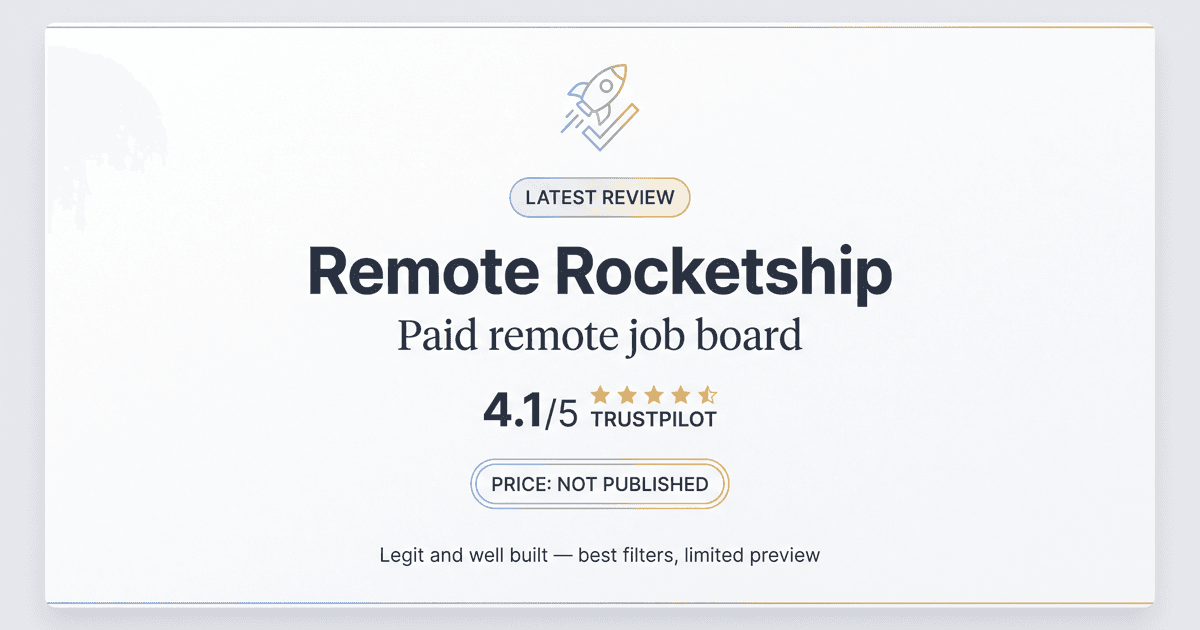
Remote Rocketship Review: Is the Paid Remote Job Board Worth It? (2026)
Remote Rocketship scores 4.1/5 on Trustpilot from 71 reviews, but it won't publish its price anywhere. Our verified review of the paid remote job board.
20 min read
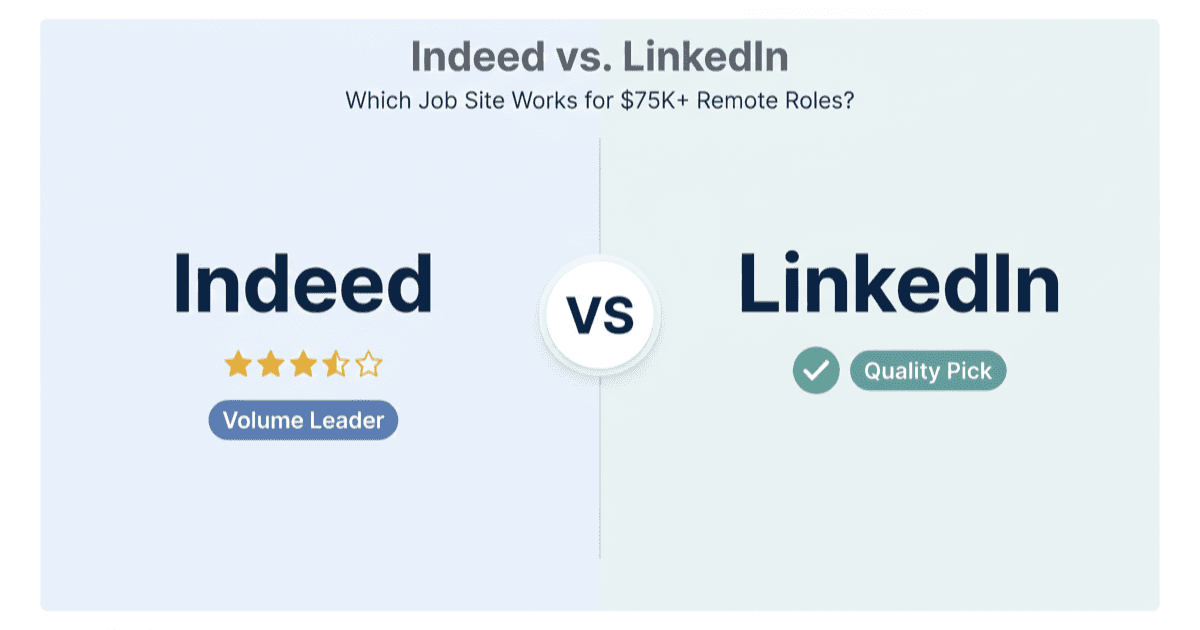
Indeed vs. LinkedIn: Which Job Site Works for $75K+ Remote Roles
Indeed vs. LinkedIn for $75K+ remote jobs: real pricing, ghost-job data, trust scores, and a framework to decide where your job search time actually pays off.
20 min read